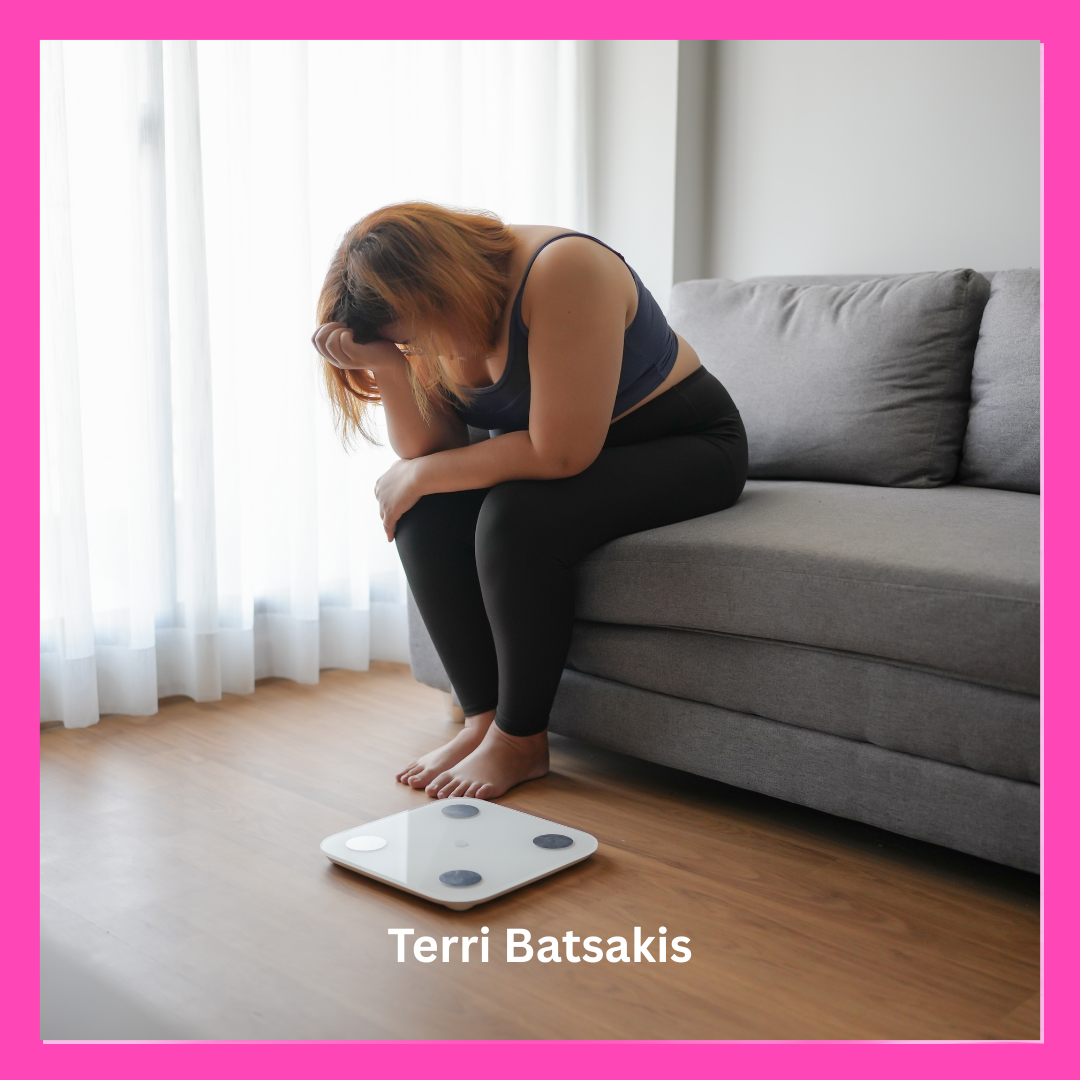
If you’re in perimenopause, eating less, skipping meals, and doing everything “right” — yet the scales keep creeping up — it can feel incredibly frustrating.
If you’re in perimenopause, chances are you grew up in the 80s and 90s, when dieting culture was loud and relentless.
“Eat less.”
“Restrict.”
“Push through hunger.”
“Be disciplined.”
Those messages shaped how women approached food for decades.
And for a while… it worked.
I know this personally.
As a teenager and young adult, I experienced anorexia. Later in life, I relied on the same strategies many women were taught — less food, more control, ignoring hunger, and pushing harder.
Until perimenopause arrived.
Suddenly, the old rules stopped working.
The less I ate, the more weight I gained.
I felt exhausted, reactive, foggy, and overwhelmed.
My sleep became unpredictable.
Stress felt harder to manage.
And stubborn belly fat appeared — despite “doing all the right things.”
So yes — I get it.
Perimenopause Changes the Rules
This is the part many women are never told.
In perimenopause:
- Hormones fluctuate rather than decline neatly
- Stress sensitivity increases
- Insulin sensitivity changes
- The nervous system becomes more reactive
In that environment, under-eating and over-restricting don’t create fat loss.
They create stress — and often, fat gain.
The Science Behind Stress and Fat Gain
When your body perceives stress — whether from life pressure, hormonal changes, or low calorie intake — it activates the fight-or-flight response.
This releases stress hormones, primarily cortisol and adrenaline.
Your body redirects resources away from digestion and long-term functions and toward immediate survival.
At the same time, your liver releases glucose into the bloodstream to provide quick energy.
This response is incredibly useful if you’re running from danger.
But when the stress is chronic — caused by hormone fluctuations, inadequate fuel, poor sleep, or constant pressure — this system stays switched on.
Excess glucose that isn’t used for immediate energy signals insulin release.
Over time, repeated insulin spikes combined with elevated cortisol increase the likelihood of fat being stored around the abdomen.
Hello stubborn belly fat.
Hello reduced insulin sensitivity.
Why This Feels Like Failure (But Isn’t)
What I see repeatedly in the women I work with is this cycle:
Eating less.
Skipping meals.
Pushing through hunger.
Trying to be more “disciplined.”
Less food leads to exhaustion.
Exhaustion increases stress.
Stress drives cravings, reactivity, and fat storage.
That’s not a discipline problem.
That’s a biology and nervous system problem.
Your Body Doesn’t Need Less. It Needs Support
In perimenopause, your body needs:
- Higher nutrient quality
- Carbohydrates managed in a way that suits your hormones and somatic body type
- Consistency, not punishment
There is no one-size-fits-all plan.
What worked in your 30s or early 40s can actively work against you now. Continuing to follow a nutrition approach from a different season of life often leads to frustration, self-blame, and burnout.
This is where mindset matters just as much as food.
Letting go of old rules can feel scary.
Eating more can feel wrong.
Trusting your body again takes time.
That’s why my role isn’t just about telling women what to eat.
It’s about helping them understand why their body is responding the way it is — and supporting them to release beliefs that no longer serve them.
You’re not failing at nutrition.
You’re eating in a way that no longer matches your physiology.
And when that clicks, everything changes.
If you’re eating well and getting nowhere, it may be time to stop forcing your body into old rules — and start supporting it in this stage of life.
💜 If you’d like support navigating perimenopause nutrition in a way that actually works, you’re welcome to book a Strategy Session.
Together, we’ll look at what your body needs now — without fear, restriction, or punishment.
Coach Terri Batsakis