For decades, women were taught one simple rule about weight loss.
Eat less. Move more. Burn more calories than you consume.
This idea, often called “calories in versus calories out,” has been around since the late 1800s. It came from early studies on how the body uses energy from food.
In theory, it makes sense.
And for many women, for a time, it even worked.
I know I followed those rules in the past. Many of the women I’ve worked with did too. And yes, at that time, the theory worked.
But midlife creates its own set of rules for women.
And this is where the calories in versus calories out approach starts to fall apart.
Without realising the rules have changed, many women continue to eat less, exercise more, and push harder.
Weight becomes stubborn and refuses to budge. Or worse, it increases.
Energy drops.
Sleep becomes harder.
Cravings increase.
And belly fat becomes even more stubborn.
Confusion sets in. Frustration follows. Often ending in, “I give up.”
The truth is that the human body is far more complex than a simple calorie equation.
Especially in perimenopause and menopause.
Calories do matter.
They’re just not the full story.
Hormones Change How Calories Are Handled
Hormones strongly influence how your body uses food and stores fat.
Insulin affects how carbohydrates are processed and whether energy is stored or used.
Oestrogen influences insulin sensitivity, appetite, and fat distribution.
Cortisol affects blood sugar, fat storage, and cravings during stress.
During perimenopause, these hormones fluctuate rather than decline neatly.
That fluctuation changes how your body responds to food.
Two women can eat the same number of calories and have very different outcomes.
Hormonal environment matters.
Food Quality Matters More Than Numbers
Not all calories are processed the same way.
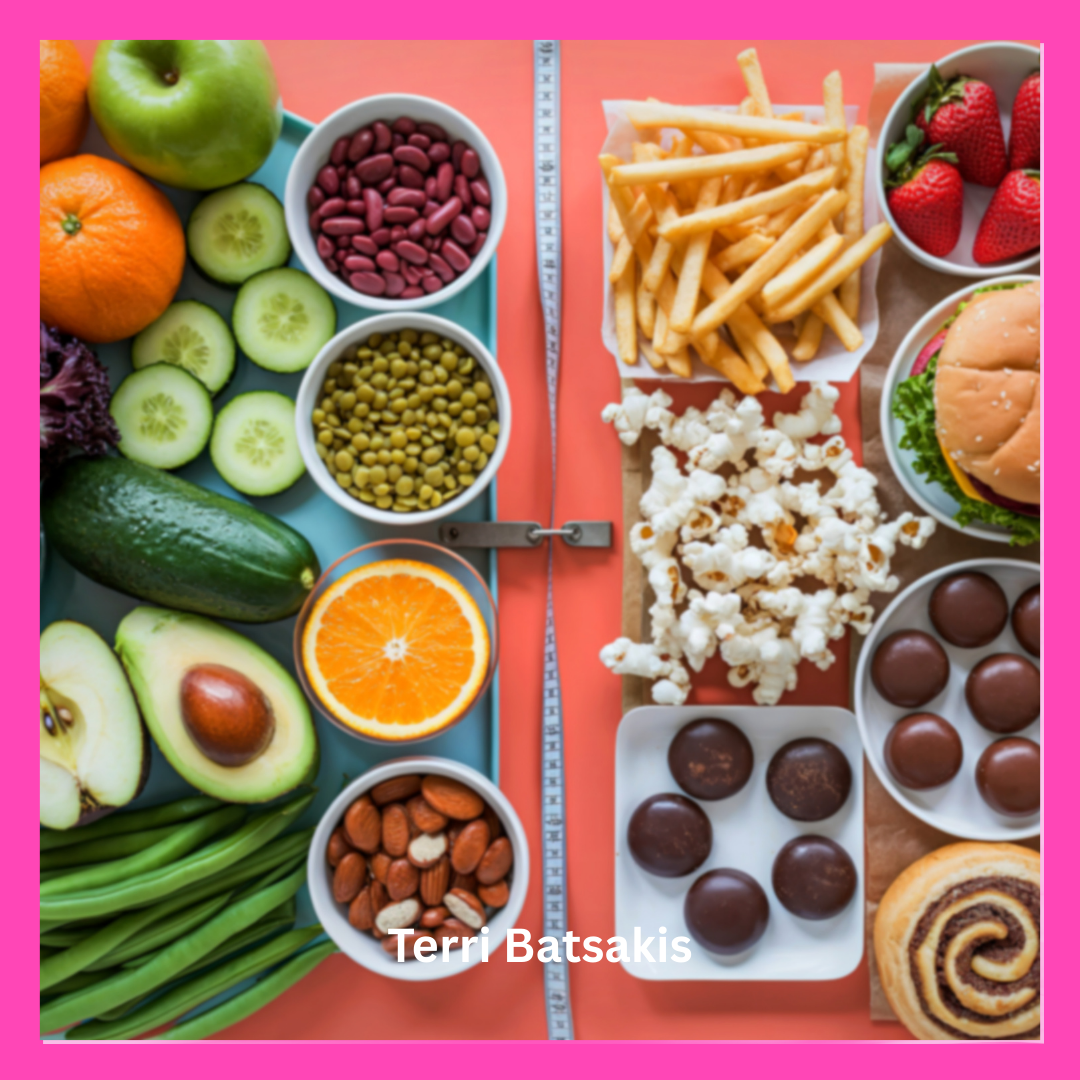
Two hundred calories of lollies and two hundred calories of whole foods behave very differently in the body.
Processed foods digest quickly and spike blood sugar.
That often leads to hunger returning sooner and overeating later.
Whole foods digest more slowly.
They support steadier blood sugar and better appetite regulation.
Calories still count.
But food quality influences satiety, energy stability, and metabolic response.
Chronic Restriction Slows the System
Many women believe eating less is the solution.
Especially when weight starts creeping up.
But long-term restriction can backfire.
When calories stay too low for too long, the body adapts.
Metabolic rate slows.
Energy expenditure drops.
Hunger signals increase.
This is basic biology.
And it’s why so many women feel stuck despite doing “everything right.”
Stress Plays a Bigger Role Than Most Realise
Stress changes how the body handles energy.
When stress stays high, cortisol remains elevated.
Blood sugar regulation becomes harder.
The body is not prioritising fat loss.
It is prioritising survival.
Stress activates the fight or flight response.
The body focuses on keeping you safe, not lean.
Fat storage, especially around the abdomen, becomes more likely.
In midlife, sensitivity to cortisol often increases.
Sleep disruption, hormonal shifts, and life demands, all compound this.
Eating less in a stressed body rarely produces fat loss.
It usually just adds exhaustion to the mix.
Gut Health Influences Metabolism
The bacteria in your gut, known as the gut microbiome, play an important role in metabolism.
A healthy gut supports digestion, reduces inflammation, and can help regulate cravings.
Fibre-rich foods like fruits, vegetables, and whole grains support this process.
Highly processed foods often do the opposite.
Your Body Likes Balance
Your body naturally resists rapid change.
It aims for balance, also known as homeostasis.
This is especially true after years at a similar weight.
At the same time, the body is adaptable.
Improved nutrition quality, strength training, stress management, and sleep can shift these patterns over time.
Meal Timing Can Support Regulation
Regular meals help stabilise blood sugar.
Long gaps without food can increase stress for some women.
There is no universal eating pattern that suits everyone.
However, many women find eating every three to four hours supports steadier energy and fewer cravings.
Consistency matters more than extremes.
The Bigger Picture
Calories are one piece of the puzzle.
They are not the whole picture.
Hormones, stress, sleep, food quality, gut health, and lean muscle mass all interact.
If eating less is no longer working, it may not be a discipline issue.
It may be a mismatch between your body and an outdated approach.
💜 If you’d like support adjusting your nutrition for this stage of life, you’re welcome to book a Strategy Session.
Together, we’ll look at what you’ve been trying and what your body may need now instead.
👉 Book your Strategy Session HERE
- Coach Terri Batsakis