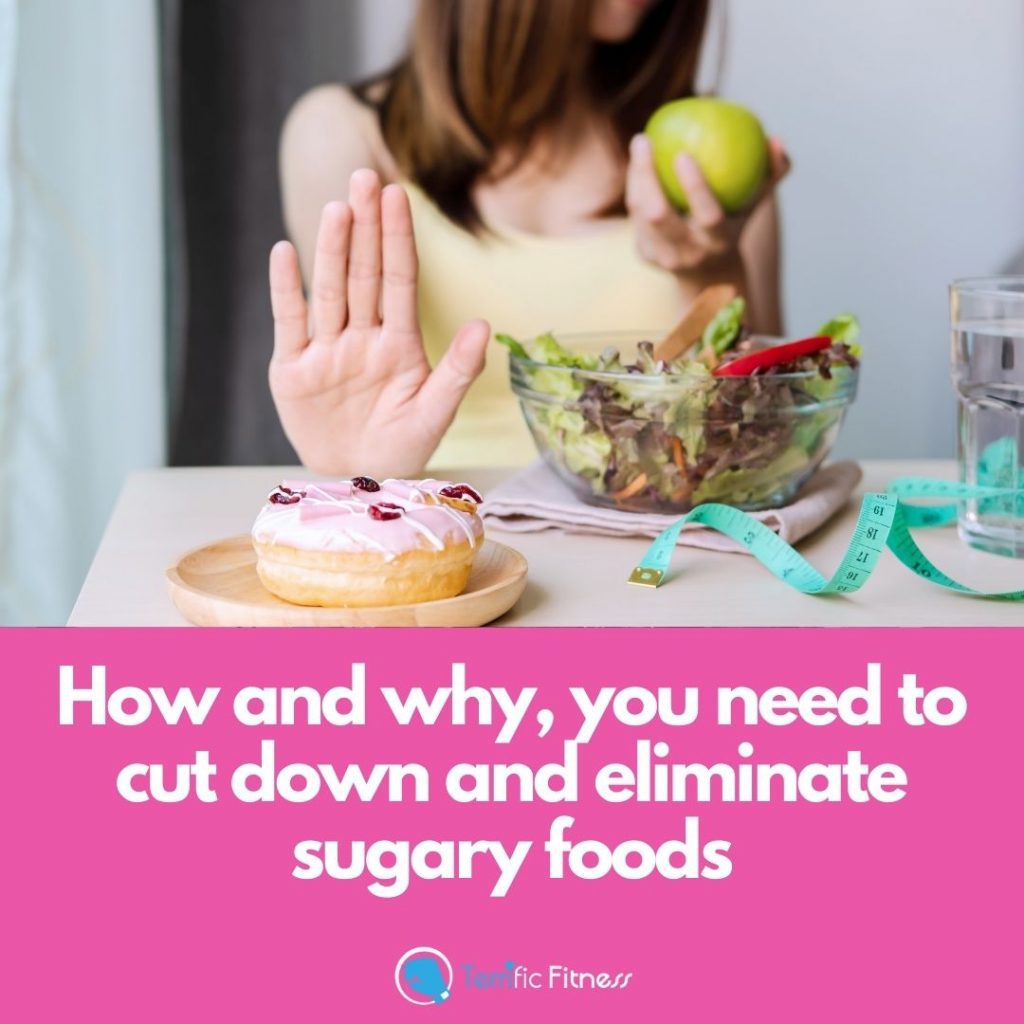
 Sugar is one of nature’s beautiful gifts to our pallets, however too much of anything, is not a good thing. Sugar has addictive consequences, and as such, food manufacturers find if they add it to just about everything, it will keep you buying more and more of their products. Great for their pocket, not so great for your health. In this article, I will explain how sugar can negatively impact your health and how you can reduce your intake, or cut it out altogether, for maximum health and fat loss.
Sugar is found in a majority of processed food. Not only to get you hooked, but it also serves as a preservative. So you will even find it in things like bread, and sauces.
Firstly, let’s look at why you should limit your sugar intake.
Sugar effect on insulin and your health:
When sugar enters your blood stream it causes more insulin to be produced. Insulin is the hormone that balances how much sugar you have in your blood at any given time. That’s because more than 5g can be detrimental to your health and even fatal. Any excess sugar is transported to your liver to either metabolize back into glycogen and stored back in your cells as energy, or metabolize into fat, and stored in your abdomen around your organs as visceral fat. Visceral fat is the dangerous fat that increases the risk of heart disease, cancer and other illnesses associated with metabolic syndrome.
When you are consuming excess sugar on a constant basis, your pancreas, which is responsible for secreting the insulin, becomes overworked. As such, it cannot keep up with the amount of insulin required and can struggle to secrete enough or secretes too much. This can lead to insulin resistance and even diabetes type 2.
Sugar’s effect on your liver:
When insulin is constantly sending sugar to your liver, it overworks the liver, causing unnecessary strain. This increases inflammation in your body that can increase risk of heart attack or stroke, as well as other health issues.
The more and more visceral fat that the liver produces, can then start to cover the liver itself, which can lead to ‘non-alcoholic’s fatty liver disease’.
The liver’s primary job in the body is to eliminate toxins. When the liver is damaged in this way, it impacts its ability to detox the body of toxins. This increases toxins traveling through the body, once again, increasing risk of health issues.
Toxins are stored in fat cells, so the more toxins you have, the bigger your fat cells become, without necessarily just storing fat. So you begin to grow in size from the toxins.
Sugar and fat gain:
With all this going on with your liver and insulin, you will start storing more and more fat. Most of it will be in the form of visceral fat, but eventually, as the fat quantity increases more and more, it will extend out to subcutaneous fat, the fat that is stored around the body.
Sugar addiction:
When you consume sugar, it triggers the opioid receptors in the brain and secretes a hormone called dopamine, your ‘feel good’ hormone. The opioid receptors are responsible for causing addiction. Addiction works by you getting your hit of the addiction product (in this case of sugar), and you then feel good for a short period. But like with any addiction, you eventually become adapted to that level of the addiction product, and so need higher and higher doses in order to get the same level of dopamine buzz. So, in the case of sugar, you consume more and more and therefore store more and more fat and your health suffers more and more. And like all addictions, it is extremely difficult to break this addiction.
Reducing your sugar intake:
Here are some simple strategies to help you reduce your sugar intake.
- If you are craving sugar, eat a tablespoon of coconut oil. This medium chain triglycerides is excellent for the brain and curbs sugar cravings.
- Substitute sugar with stevia, a natural sweetener that does not impact your body the same way as sugar, for all your baking needs and cooking needs, as well as sweetener in your coffee or tea.
- Cut down how much sugar you are having in your coffee and tea, reducing it weekly, until you have none.
- Limit treat foods such as lollies, chocolates, take out, cup cakes etc. to only once or twice a week, rather than having a piece here and there throughout each day.
- Opt for meals over snacks to reduce exposure and cravings to sugary foods. Rather then having 3 meals a day and morning and afternoon tea, change this around to 4-5 meals per day, no snacks.
- Do not drink your calories. Soft drinks and juices are the biggest culprits for sugar intake. Swap these for fruit infused water or mineral water, or herbal teas.
- If you are wanting something sweet, have a piece of fruit rather than a sweet snack of any sort. The sugar in fruit does not impact your insulin the same as other sweet food. This is because fruit also contains fibre, which prevents the spike of insulin.
Breaking your sugar addiction:
You can do this one of two ways; you can either cut down gradually until you are having none at all. Or you can go cold turkey.
The problem with cutting down slowly is that it drags out, and often people find it difficult to actually break the addiction.
Cold turkey is hard, but is the best way. For 14 days, put yourself on a super strict 14 day eating regime where you are eating nothing but fresh produce, minus even the fruit. This will help you calm the opioid receptors in the brain, stop cravings and then be able to enjoy a sweet treat here and there without the addiction. As long as of course, you don’t start consuming sweet food daily again!
If you need help with breaking your sugar addiction, shoot us a message and we will give you some info on our Nutrition Coaching Program. The first phase is just that; breaking sugar addiction.
- Coach Terri